The Geometry of uPVC Profiles
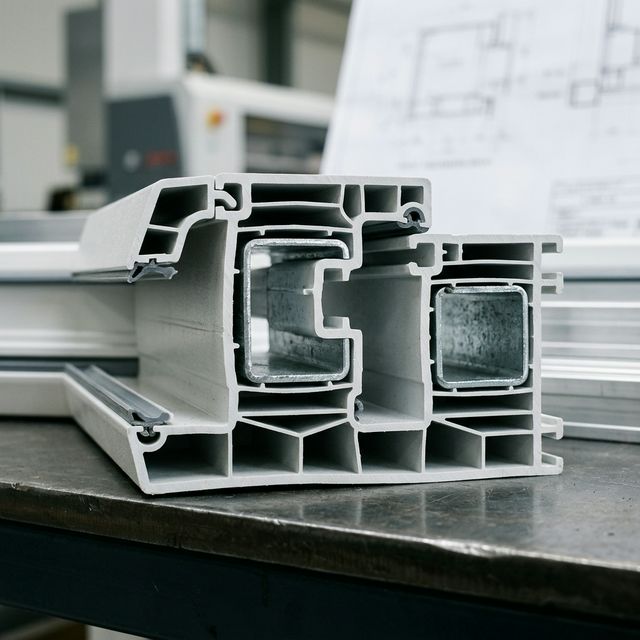
Plastic window frames use unplasticized polyvinyl chloride. Engineers call this uPVC. A solid block of plastic conducts heat quickly. Solid plastic also weighs too much. Designers solve this problem by extruding hollow profiles.
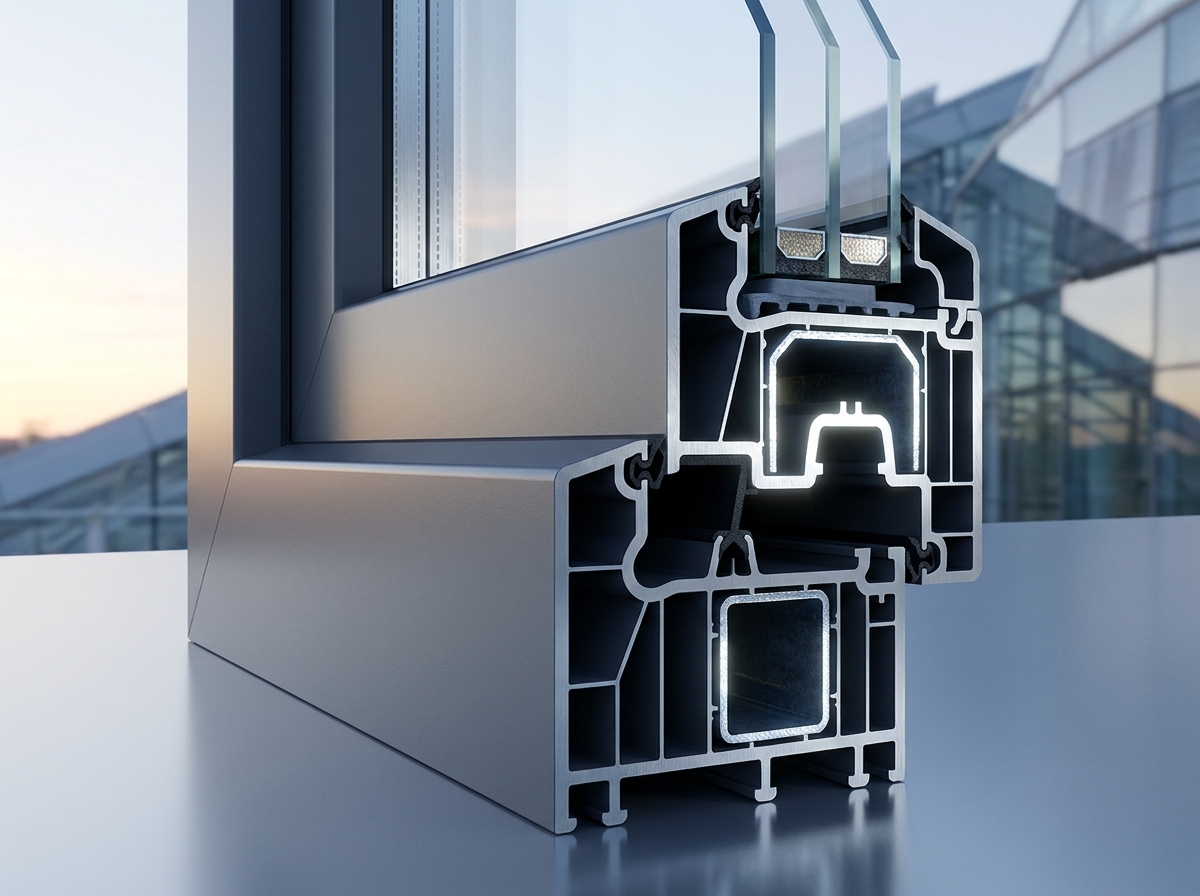
These profiles contain multiple air chambers. Each chamber acts as an isolated pocket of air. Still air does not conduct heat well. Adding more chambers increases the thermal resistance of the frame.
Most modern profiles use between three and eight chambers. The outer chambers drain water. The middle chambers provide strength. The inner chambers hold the metal reinforcement.
Thermal Calculations and the U-f Factor
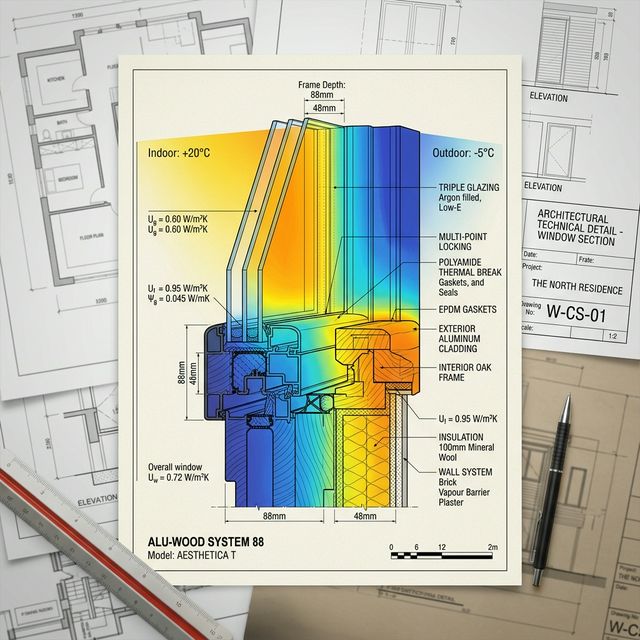
Engineers measure frame thermal performance using the U-f factor. This factor represents the thermal transmittance of the frame. A lower U-f factor means better insulation.
Adding chambers lowers the U-f factor. A three-chamber profile has a U-f value of approximately 1.6 Watts per square meter Kelvin. An eight-chamber profile can drop this value to 0.9 Watts per square meter Kelvin.
However, adding chambers increases the depth of the frame. A standard three-chamber frame has a depth of 60 millimeters. An eight-chamber frame requires a depth of 82 millimeters or more.
Structural Steel Reinforcement Dynamics
Plastic expands and contracts with temperature changes. Wind pressure also exerts force on the window frame. Large windows need extra strength to resist these forces.
Engineers insert galvanized steel profiles inside the main chamber of the uPVC profile. This main chamber sits in the center of the frame. The steel profile must match the shape of the chamber. This metal insert provides structural rigidity.
Engineers anchor hardware like hinges and locks directly into this steel core. This connection prevents screws from pulling out of the soft plastic.
The Thermal Bridge Dilemma
Steel conducts heat very quickly. Placing steel inside the frame creates a thermal bridge. This thermal bridge increases the overall U-f factor of the window.
Engineers must balance structural strength and thermal performance.
Some manufacturers replace steel with composite materials. Glass fiber reinforced polymers offer high strength and low thermal conductivity.
Other designs use thermal breaks inside the steel chamber. These breaks split the metal into two parts. A plastic strip connects the two parts to stop heat transfer.
Wall Thickness and Class Classifications
European standards classify uPVC profiles based on wall thickness. Standard EN 12608 defines three classes.
Class A profiles have an outer wall thickness of three millimeters or more.
Class B profiles have an outer wall thickness of two and a half millimeters or more.
Class C profiles have no specified wall thickness minimum.
Class A profiles offer the highest resistance to bending and warping. Class A profiles also provide stronger welded corners. Choosing Class A profiles ensures the window can support heavy double or triple glazing units. Thicker walls also hold screws more securely.
Welded Corner Joints and Load Transmission
uPVC frames do not use mechanical corner joints. Manufacturers cut the profiles at a forty-five degree angle. A special machine heats the cut ends to two hundred and fifty degrees Celsius. The machine then presses the melted ends together. This process welds the corners.
A welded corner forms a single solid piece of plastic. This joint resists water penetration.
The steel reinforcement does not extend into the welded corner. This gap creates a structural weak point.
Engineers solve this by inserting plastic corner connectors. These connectors bridge the gap between the steel tubes. The connectors screw into the steel on both sides of the corner. This configuration transfers the load across the joint.
Glazing Rebate and Drainage Systems
The glazing rebate is the flat shelf where the glass sits. Water can bypass the outer gaskets during heavy rain. The frame must drain this water away from the glass unit.
Engineers design a sloped floor inside the glazing rebate. This slope directs water toward drainage holes.
The drainage holes exit through the bottom or front of the outer frame profile. These holes must remain clear. Blocked drainage causes water to accumulate. Standing water damages the seal of the double glazed unit. This damage leads to condensation inside the glass.
Extrusion and Material Integrity
The manufacturing process shapes the uPVC profile. Machines force hot plastic through a metal die. This process is extrusion.
The cooling process must occur slowly. Rapid cooling creates internal stress in the plastic. This stress causes the profile to warp later.
Co-extrusion allows manufacturers to combine recycled uPVC with virgin uPVC. The recycled material forms the inner core. The virgin material forms the outer weather-resistant layer. This method reduces production costs and environmental impact.
Gasket Integration and EPDM Membranes
Air tightness prevents draft and water leaks. Profiles feature channels for weatherstripping.
Manufacturers use Ethylene Propylene Diene Monomer gaskets. These EPDM gaskets resist ultraviolet radiation and extreme temperatures.
Co-extruded gaskets fuse directly to the uPVC profile during extrusion. This fusion eliminates gaps and ensures a continuous seal around the window sash.